Since 2021 I've engineered open-source Tibia servers (TFS · OTX · OTServBR) for clients worldwide through OTland — complete gameplay systems, event engines, real-time interfaces and game-connected web platforms. Everything below is a real system running on production servers.
01 · Server Core — C++ / Lua
Advanced gameplay systems built inside the server engine itself:
Instance System
Arena Matchmaking
Instant Item Recovery
Private / Offline Shop
Container Auto-Loot
Step-Lag Fixes
Depot Password
Mount System backport
Anti-bot / Anti-push
02 · Event Engine — one core, many modes
Tower Siege, King of the Hill, Death Match, Defend the King — all running on a single configurable, server-agnostic core. Modes switch from a config file… without touching code.
Reusable architecture
Config-driven
Multi-mode PvP
03 · Real-Time Game UI — OTClient / OTCv8
Interface modules that update in front of the player the instant the server changes:
Task System
Skill Tree
Boss Progress Bar
Bounty System
Lore System
Item Craft & Upgrade
Custom OTUI modules
04 · Game Web Platforms — PHP / MySQL
Full account websites (Gesior · MyAAC) wired straight into the game database: registration, shops, player rankings, custom layouts with smooth JavaScript menus — coded from scratch.
Gesior / MyAAC
HTML · CSS · JS
Site ↔ game integration
Straight from production — real modules, real screenshots
05 · Arena Matchmaking
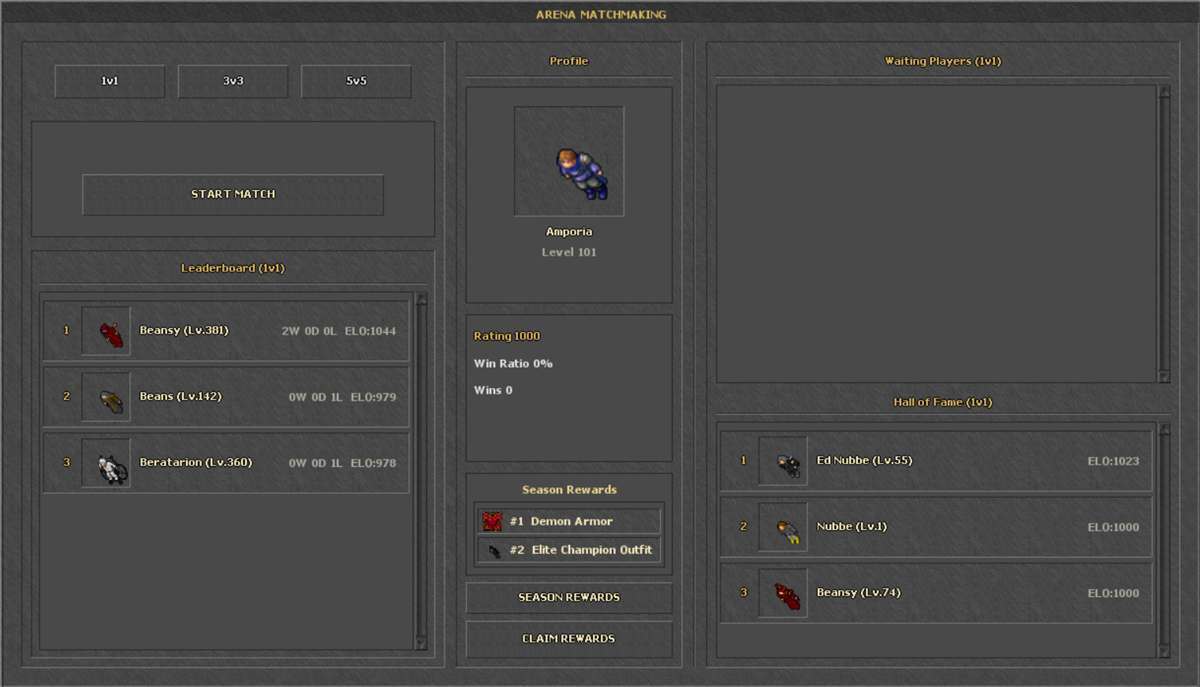
A complete PvP matchmaking surface across three modes (1v1 / 3v3 / 5v5): an ELO-ranked leaderboard, a live player card with rating and win ratio, season rewards claimable right from the window, and a waiting-players list showing who's queued right now.
06 · Task System — three different builds
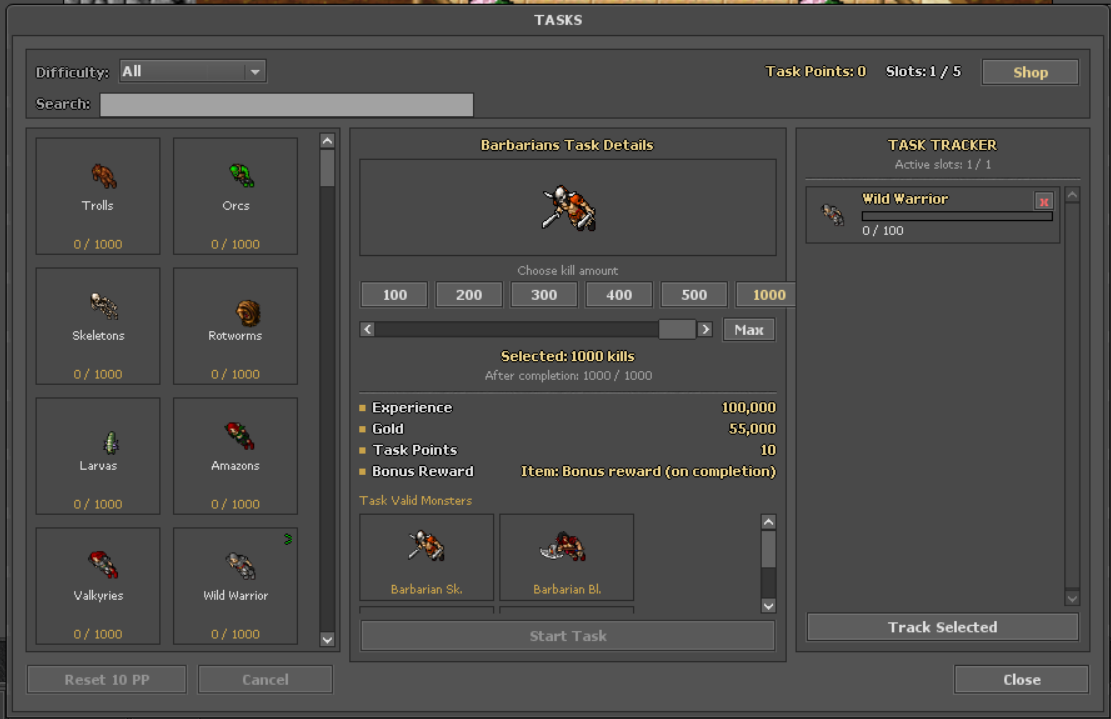
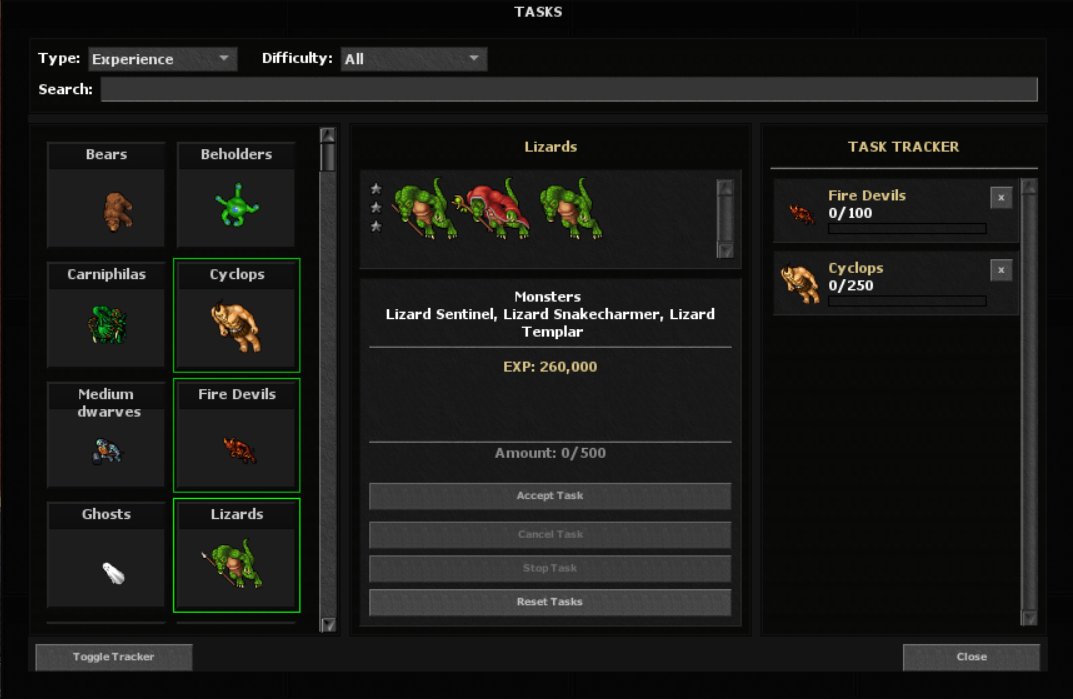
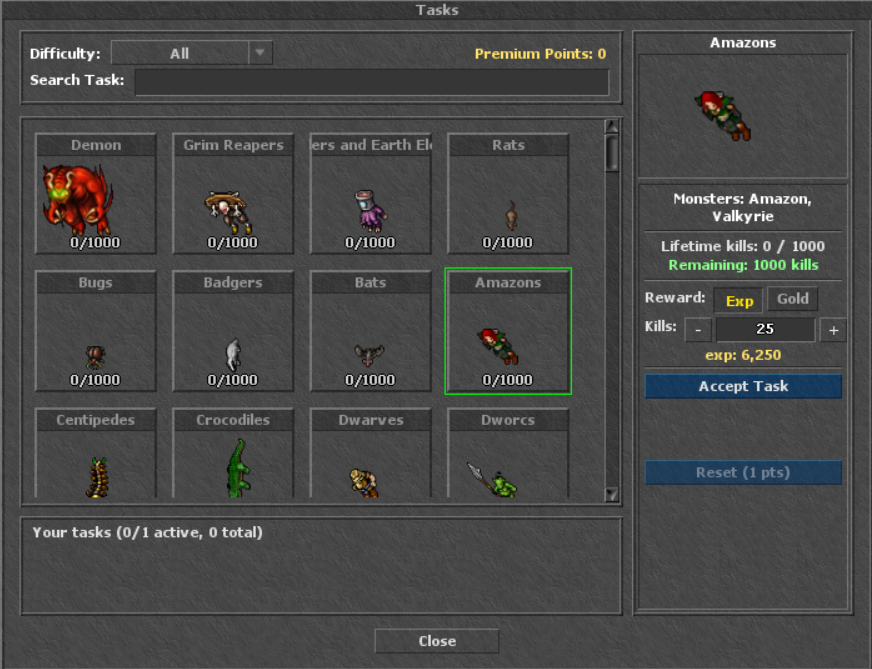
Same task engine, rebuilt from scratch for each client: premium-points rewards, or gold-and-task-points, or a pure kill-count slider with a live exp breakdown before accepting — one core, three completely different economies.
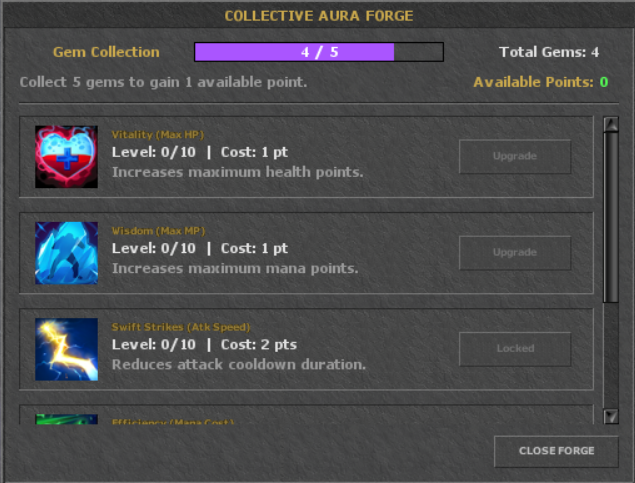
A gem-collection progression system: every 5 gems earns a point spendable on permanent upgrades (health, mana, attack speed) — each card clearly Upgrade / Locked / Maxed.
08 · AutoLoot Management
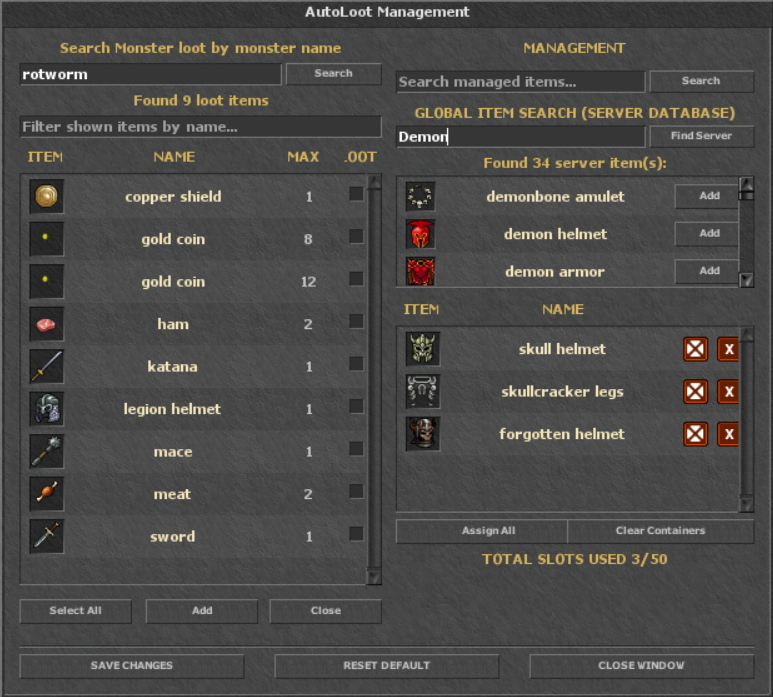
Full loot-list management: search a specific monster's drops, a global server-item search to add anything by name, and managed item lists with a clear slot cap — client-driven and server-synced.
09 · Bounty Hunter
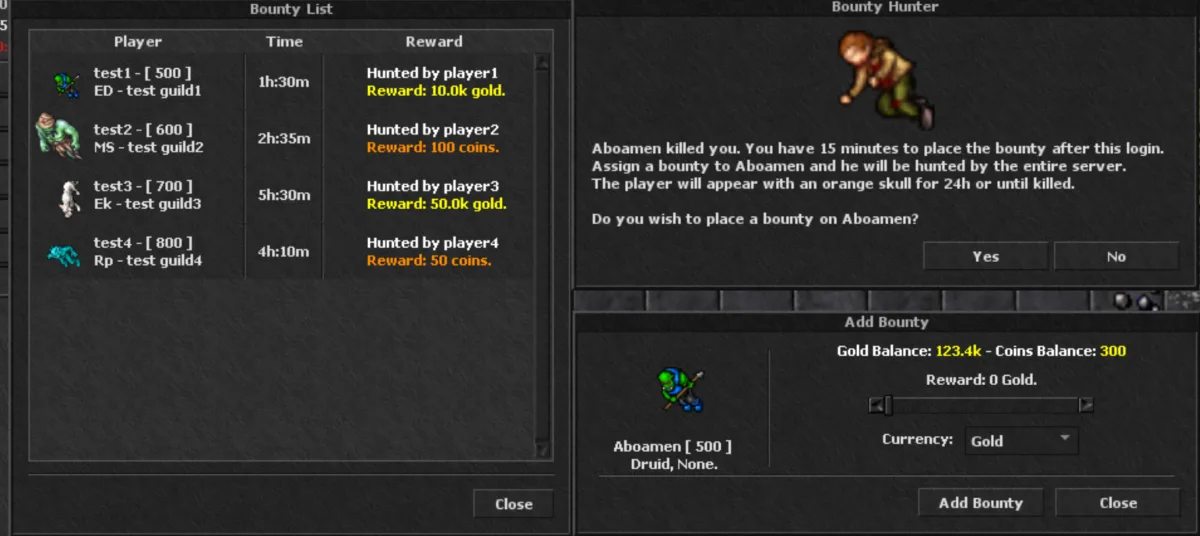
Server-wide bounties: a live bounty board with gold/coin rewards, an automatic prompt to place one on whoever just killed you, and a 24-hour (or until-killed) orange-skull hunt on the target.
10 · Item Craft & Upgrade
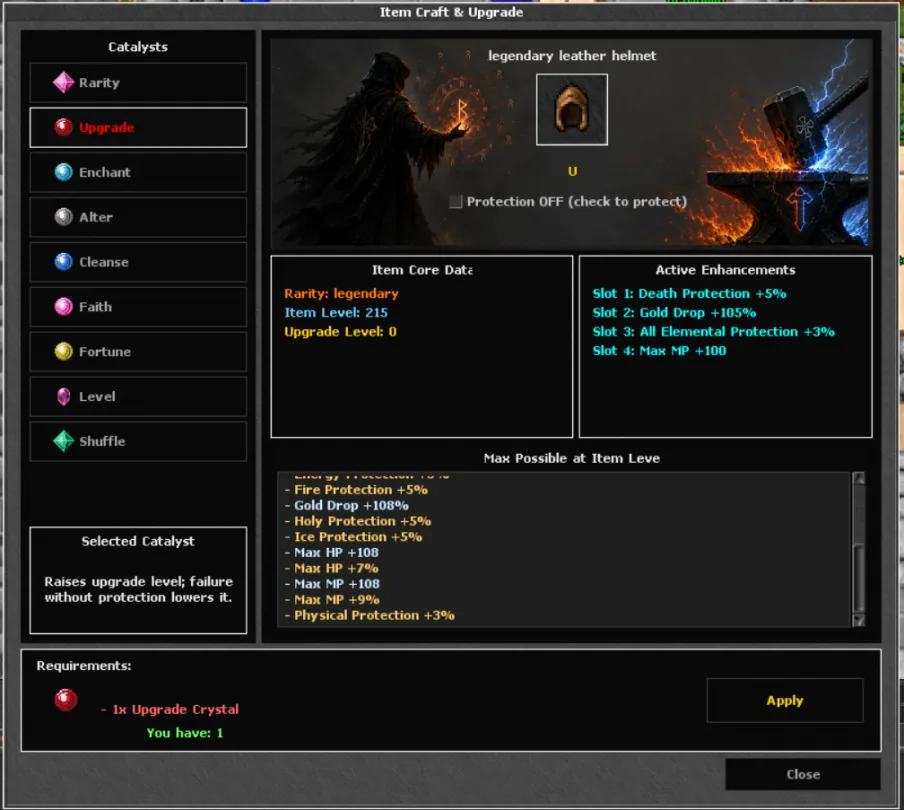
Eight catalysts (Rarity, Upgrade, Enchant, Alter...) act on a live item: item level, four active enhancement slots, and a computed per-level ceiling — with an optional protection toggle against a failed upgrade.
11 · Private Shop Marketplace
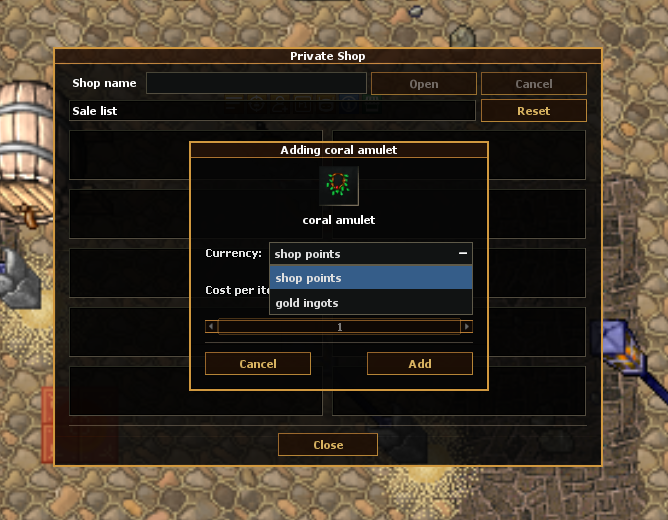
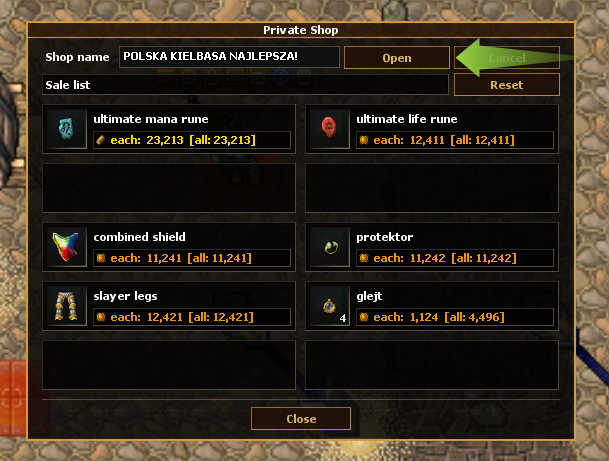
A central marketplace where any player opens their own shop: sell offers priced in gold ingots or shop points, an add-item dialog for picking currency and price per unit, and a live shop window showing the full sale list with bulk totals — working even while the seller is offline.
Adding an item — currency choiceA live shop — full sale list
Battle-tested operations
Line-by-line crash tracing with GDB · hunting exploits and edge cases before players find them · hex-level analysis · a 4-year, 150MB production item database · live servers holding 150–300+ players on OVH, Hetzner, Contabo and Google Cloud · 11 custom extended opcodes with audited server↔client contracts.